Translate
Turn component-level inputs into a coherent visual model a non-specialist can understand.
Strategy + build
Paul designed and built a workflow that produces 3D enclosure models for customer bids. It made the proposed solution tangible and helped his client win a major deal.
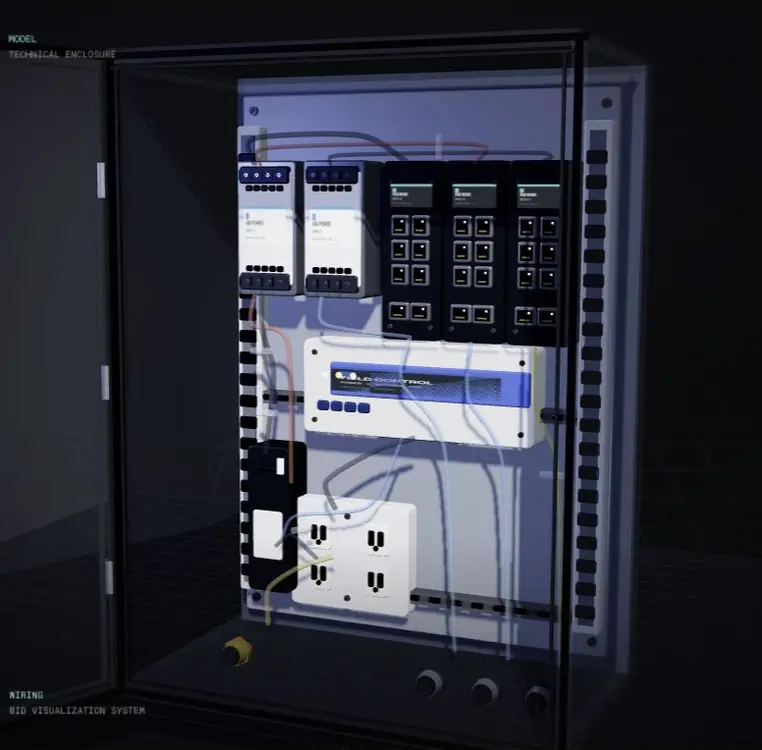
Specifications and component lists described the enclosure accurately, but they asked the customer to assemble the finished system mentally. That gap created friction at the point where confidence mattered most.
Paul turned the specification into a visual operating workflow. The system arranged the enclosure, internal components, power, networking, airflow, and access into a model a customer-facing team could explore and present.
The result was more than a rendering. It became a repeatable way to translate technical work into customer clarity, reduce ambiguity during a bid, and give the sales conversation a shared object.
What changed
Turn component-level inputs into a coherent visual model a non-specialist can understand.
Let the team show access, placement, connections, and enclosure states instead of relying on static specification sheets.
Create a workflow that can support future bids rather than a one-off presentation asset.
Disclosure boundary
The customer, client, deal terms, dimensions, vendor labels, technical callouts, and security details are not published. The enclosure shown here is a sanitized portfolio interpretation that demonstrates the method without reproducing the protected source model.
Related work
See how the same strategy seat extends into AI operations and marketing execution.
Explore AI operations